24/7 Water Supply Projects
Intermittent Vs. Continuous
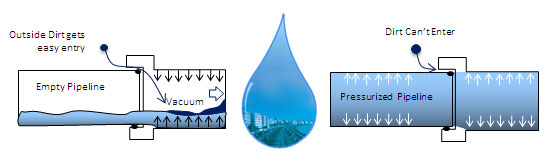
Many cities are forced to intermittent supply resulting in proneness to epidemics- hence, initiative of 24/7 assumes paramount importance.
| Intermittent | 24/7 Continuous |
| Pollution due to ingress of contaminants | Better health outcomes |
| Large doses of Chlorine | Less doses of Chlorine |
| Capacities underutilized | Tank capacities optimally utilized |
| Frequent daily operations- Valves suffer wear and tear | No daily operations-Steady pressures- Life of network increases |
| More man power- Zoning | Less man power |
| Higher sizes of pipes | Optimum sizes of pipes |
| Supply hours affect poor | Water is accessible to poor |
| Pay for pumping | Coping costs are negligible |
| Meters go out of order | Meters work satisfactorily |
| Store and throw away tendency | Water reliance |
| Wastage of treated water | No such wastage |
| Less willingness to pay | Willingness to pay- even in slums |
| 3 hours for fetching water | Time spared for other rewarding activities. |
| No industrial growth | Attracts industries |
Why Indian Cities don't Provide 24/7 Water Supply?
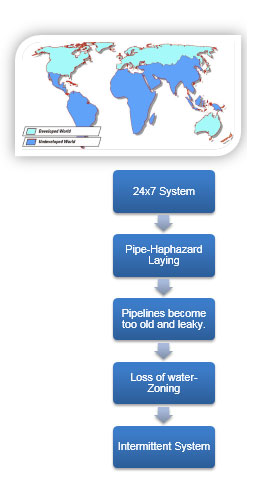
- » Developed Countries
- » 24/7 continuous water is synchronized properly by pumping and storage,
- » Use variable frequency drive pumps,
- » These pumps supply water to different areas that sit on various altitudes,
- » 24/7 electricity is available.
- » India
- » Electricity is not available on 24/7 basis, hence engineers have to manage water supply systems with indigenous efforts.
- » Compelled to Zoning Method
- » As the supply is less than the demand, water is supplied to one part of the city at a time, on relaying method,
- » After meeting some demand of the water in one area, the water is then supplied to another area, that creates conflict.
- » This situation gives birth to the undesired zoning system, in which demand of the parts of the city are partly satisfied in cyclic way.
- » Thus the ULB is forced to run the system in an intermittent mode.
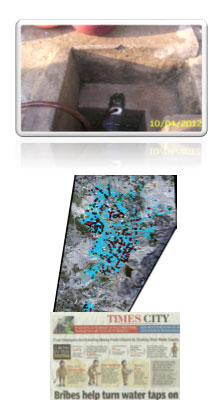
- » Very High NRW
- » Most of the cities have NRW more than 40-50%
- » Bad Pipe Material
- » Pipes which are vulnerable of tampering, increase leaks
- » Low Pressure
- » People dig pits and collect water,
- » Sucking of water by pumps, hydraulics is disturbed,
- » Contamination of water through punctured holes on pipes.
- » Un-deterrent Tariff
- » Low tariff leads to high consumption
- » A Large number of Valves
- » Most of the cities have thousands of operating valves. Its operation disturbs hydraulics and give rise to corruption
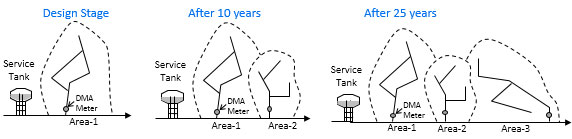
- » Haphazard Pipe Laying
- » Pipelines laid in haphazard manner,
- » Laying without consideration of scientifically designed operational zones,
- » Operation by bypassing service tanks,
- » Direct connections on pumping mains
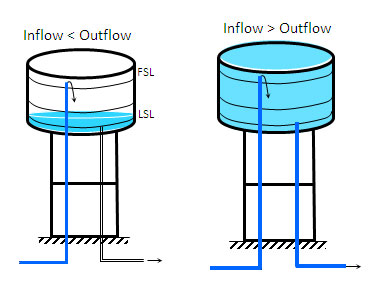
- » Common Practice
- » In peak hours water is let out, tank is filled in non-supply hours,
- » No equitable pressure and equitable quantity,
- » Tanks Remain Empty or Overflowing
- » Capacity of tank is not enough to cater the demand of its service area (operational zone),
- » In most of the systems, tanks remain either empty or found to be overflowing,
- » The status of tank- empty or overflowing is due to lack of design of the operational zones of distribution system.
- » Maps Unavailable
- » Base drawings of pipe network not available with the Urban Local Bodies,
- » Tracking of the pipelines laid in different time frame is a daunting task.
- » Unawareness of Modern Technology
- » Design manually,
- » GIS and hydraulic modeling not in use.
- »
- »
What is the Solution?
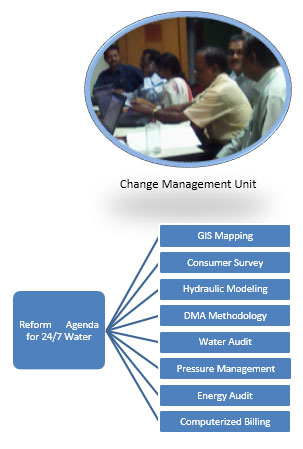
- » ULB to Create CMU
- » ULB should create a special task team, called as Change Management Unit (CMU),
- » The team should stay in areas where maps are not available,
- » CMU team would interact with people who laid pipelines and then map pipe network with GPS
- » Water Reforms
- » Water reforms must be initiated for improving water service delivery
- » Un-deterrent Tariff
- » Low tariff tends to high consumption
- » Reform Strategy
- » All the parameters are equally important and are inextricably linked. If anyone of them is not achieved, then it imay not tbe ossible to transform the existing intermittent supply into 24/7 continuous water supply'
- » For example, if technical parameters such as creation of hydraulic model, using DMA methodology and metering activities are carried out, but if proper tariff is not levied , then there will be rise in unrequired consumption rather than expected decrease in the supply rate and there will be shortage of water.
- » ULB to Create CMU
- » ULB should create a special task team, called as Change Management Unit (CMU) which will stay in areas where maps are not available, they would interact with the people who laid pipelines and then map them with GPS
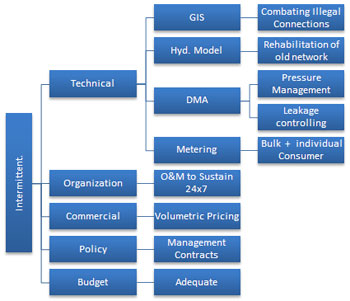
- » GIS Maps
- » 3D Stereo paired Satellite should be used for generation of contours,
- » Road network helps mapping existing pipes,
- » With consumer survey, customers are mapped on GIS.
- » GIS Hydraulic Model
- » Helps design of operational zones, DMAs and pipelines for various design stages,
- » Helps formulation of strategy for reduction in NRW,
- » Helps to distribute water equitably with equal pressure,
- » Helps for pressure management.
- » Water Reforms
- » Water reforms must be initiated
- » Implementation must be methodical
- » NRW Reduction- A Continuous Process
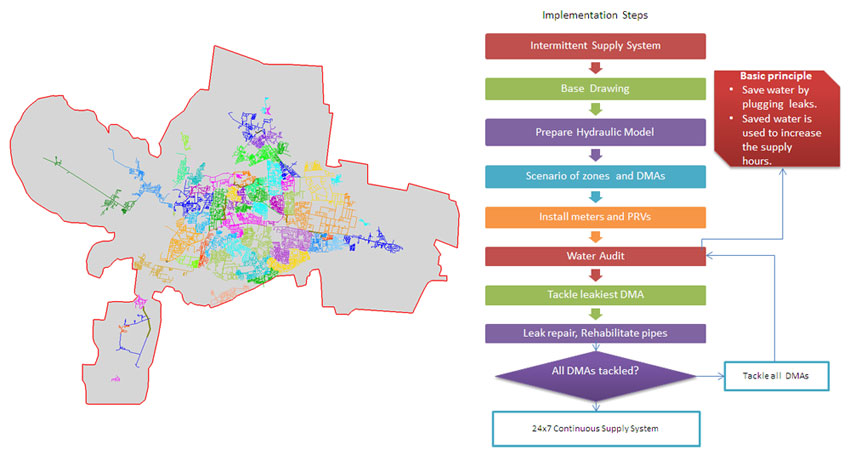
- » The basic principle of conversion process to 24/7 system is to save the water by reducing Non-Revenue Water (NRW). This process must be a on going one for effective reduction in NRW.
- » PPP projects
- » Concession period PPP projects should be encouraged
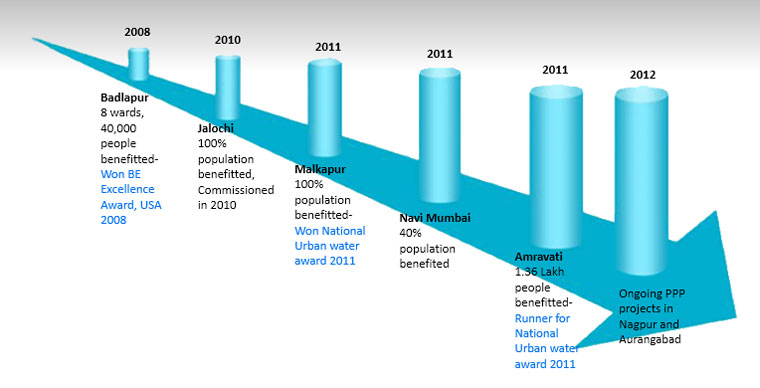
Achievements